
7 min read · Last updated September 25, 2026
- Most states require a minimum number of new job contacts every week, commonly three, and require the claimant to keep proof, not just complete the search.
- A federal audit program called Benefit Accuracy Measurement pulls a random weekly sample of paid claims and investigates each one, including whether the claimant can document the work search for that specific week, sometimes months after the benefits were paid.
- Whether an overpayment found this way can be waived depends entirely on the state. New York has no waiver provision for a non-fraud overpayment at all; other states will waive it for financial hardship or agency error.
- An overpayment is calculated by multiplying the weekly benefit amount by every week the audit finds ineligible, which is why a single missing week of records can turn into a bill covering an entire certification period.
Most states require a minimum number of documented job contacts every week, commonly three, and a federal random-sample audit program can revisit any specific paid week months later and demand proof of that search, turning an undocumented week into an overpayment calculated as the weekly benefit amount times every week found ineligible.
In this article
- What “actively seeking work” actually requires, week by week
- How the requirement differs by state
- Why an audit can reach back months
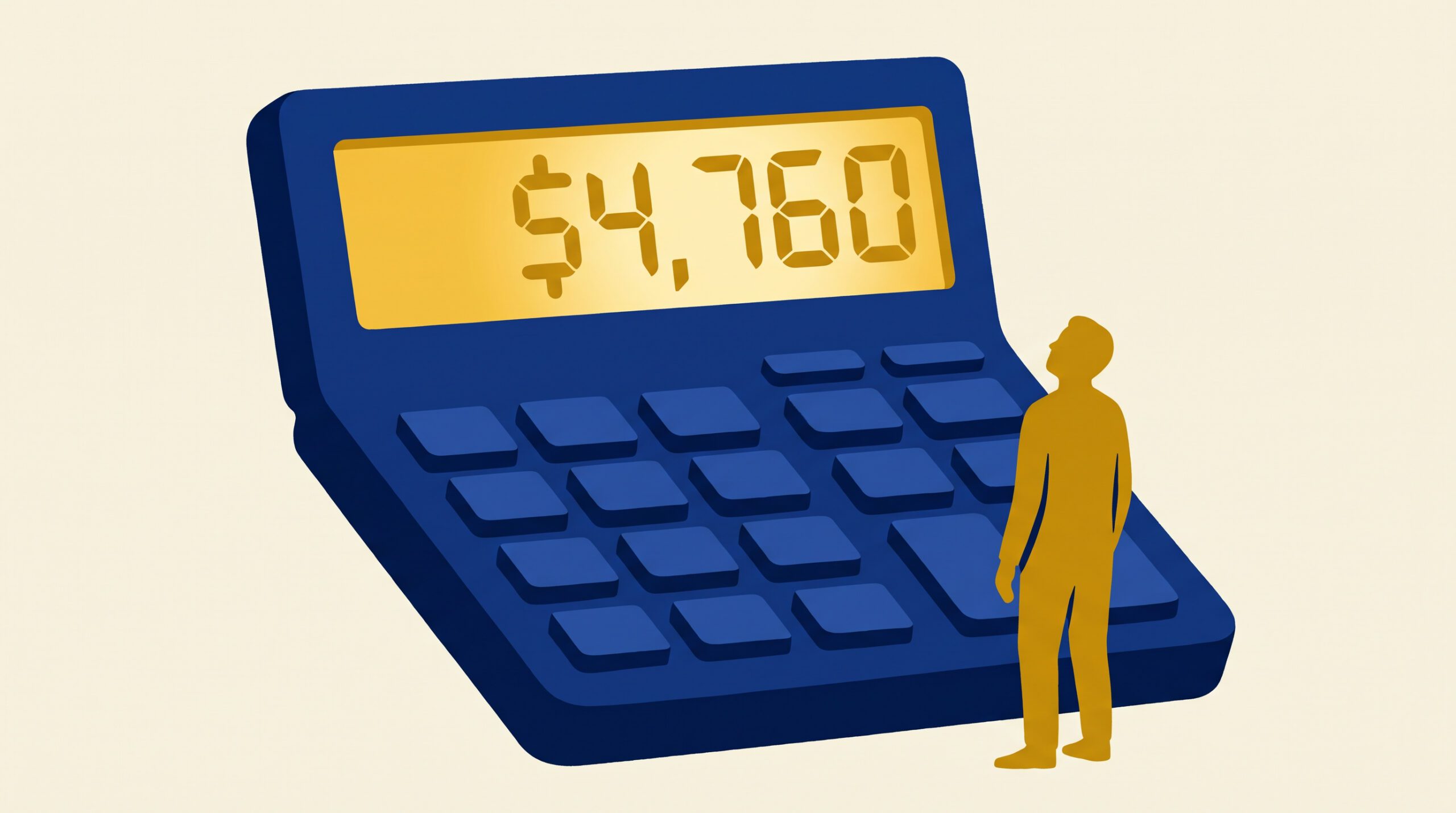
- How a $4,760 overpayment gets built from $340 a week
- The mistake that costs claimants the most
- What to do at 30, 60, and 90 days
- Frequently asked questions
He certified for unemployment benefits 14 weeks in a row and never missed a deadline, but when the audit letter arrived the following March, it wasn’t asking whether he had certified. It was asking him to prove, for one specific week eight months earlier, exactly which employers he had contacted, and the answer determined whether he owed $4,760 back.
If your benefits have already run out and no extra weeks are available in your state, see what to do when unemployment benefits end and Extended Benefits has not triggered.
What “actively seeking work” actually requires, week by week
Weekly certification usually asks a claimant to confirm they were able and available for work and that they completed a minimum number of work-search activities that week. In New York, that minimum is at least three documented work-search activities every week, and the state explicitly warns that it verifies the contacts claimants list. Georgia sets the same minimum of three, but requires the contacts to be with employers not previously contacted, a stricter version of the same rule.
The certification questions themselves are usually short, closer to a checklist than a form, which is exactly why the requirement is easy to under-document. Answering “yes, I searched for work” honestly is not the same as being able to produce which employer, on which date, through which method, months after the fact.
How the requirement differs by state
The specific count, and what counts as a contact, varies enough that a rule learned from a previous claim, or from a friend in another state, can be wrong for the state actually paying the benefit. Florida sets its minimum by county population: five work searches a week in a county of 75,000 people or more, three in a smaller county, or one appointment with the state’s CareerSource center as a substitute for either.
| State | Minimum weekly work-search contacts | Recordkeeping | Waiver if overpaid without fault |
|---|---|---|---|
| New York | At least 3 activities per week | Keep paper records for 1 year if not using the state’s online system | No waiver provision for a non-fraud overpayment |
| Georgia | At least 3 new contacts per week, with employers not previously contacted | Submit evidence by internet or fax when requested | Available for equity/good conscience or financial hardship |
| Florida | 5 per week in counties of 75,000+ people; 3 per week in smaller counties (or 1 CareerSource appointment) | Reported during each biweekly benefit request | Available for employer error only |
New York’s absence from the waiver list is not a gap in reporting. The Department of Labor’s own comparison of every state’s unemployment law lists New York among 11 states and territories with no waiver-of-recovery provision at all for a non-fraud, non-fault overpayment, meaning the amount is owed back regardless of how the mistake happened.
Why an audit can reach back months
The retroactive review that catches a missing work-search record has a name: Benefit Accuracy Measurement (BAM), a federal program, required by regulation for nearly every state, that pulls a random weekly sample of paid unemployment claims and investigates each one in detail, including the claimant’s work-search efforts for that specific sampled week. Roughly 24,000 cases are drawn nationally every year. Because the sample is random and the investigation happens after the fact, a claimant has no way to know in advance which of their paid weeks might get pulled for review, which is exactly why every week’s documentation has to hold up on its own, not just the weeks that felt more memorable.
How a $4,760 overpayment gets built from $340 a week

An overpayment amount is not a penalty on top of the benefit. It’s the benefit itself, clawed back for every week the audit determines the claimant did not actually meet the eligibility requirements, even if the payment was made in good faith at the time. Take a claimant with a weekly benefit amount of $340, a common figure in several states. If a BAM audit reviews one sampled week, cannot verify the required work-search contacts for it, and the state’s rules treat similar undocumented weeks the same way, the agency can extend the same finding across every week in that certification stretch with the identical gap in records. Fourteen weeks at $340 each comes to $4,760, exactly the kind of total that shows up on an overpayment notice built from one underlying documentation problem repeated, not fourteen separate mistakes.
The mistake that costs claimants the most
The costliest mistake isn’t skipping the work search. It’s doing the search and not keeping proof of it in a form that survives months later: a contact list you deleted, a browser history you cleared, a paper log you didn’t keep because you assumed clicking “yes” on the certification screen was the whole requirement. New York’s own guidance says directly that it will verify the contacts a claimant lists, which only works in the claimant’s favor if there’s still something to verify by the time anyone asks.
What to do at 30, 60, and 90 days
In the first 30 days of any claim, confirm your own state’s specific weekly minimum and what counts as a contact, since assuming a number from a previous claim or another state is one of the fastest ways to fall short without realizing it, and start a running, dated log of every contact, employer name, date, and method, even for weeks that feel routine. By 60 days, make that log a habit for every week you certify, and hold onto it for at least a year past the week it covers, since a sampled week can surface for review long after it was paid. By 90 days and beyond, if an overpayment notice ever arrives, read it for the specific week and reason cited before responding, and check whether your state offers a waiver for a non-fault overpayment before assuming the full amount has to be repaid immediately. A work-search finding is also different from a disputed claim your employer is actively contesting, so don’t assume the same appeal deadline or process applies to both.
Frequently asked questions
How many work-search contacts does my state actually require? It varies. Common minimums are three per week, but some states set a higher number, require contacts to be with employers not previously reached, or offer alternatives like a career-center appointment. Check your own state unemployment agency’s website rather than relying on a number from a previous claim or another state.
How far back can an unemployment audit go? Benefit Accuracy Measurement audits pull random weekly samples on an ongoing basis, so a paid week can be selected for review months after it was paid. States also run their own additional integrity checks separate from BAM, so there’s no fixed cutoff after which a paid week is guaranteed safe from review.
What happens if I genuinely can’t produce records for a sampled week? The agency will typically ask you to reconstruct what you remember and may deny that specific week’s eligibility if it can’t be verified, which can then trigger an overpayment finding for that week and any others found to have the same documentation gap.
Can an overpayment I didn’t cause on purpose still be waived? It depends entirely on your state. Some states waive non-fraud overpayments for financial hardship, agency error, or equity and good conscience; a handful of states, including New York, have no waiver provision at all for a non-fraud overpayment, meaning the full amount is owed regardless of fault.
Does an overpayment finding mean I committed fraud? Not necessarily. States separate non-fraud, no-fault overpayments, often caused by paperwork gaps or agency miscalculations, from fraud overpayments involving a willful misrepresentation. The two are treated very differently, including for waivers, penalties, and whether criminal referral is possible.





Leave a Reply