
6 min read · Last updated October 5, 2026
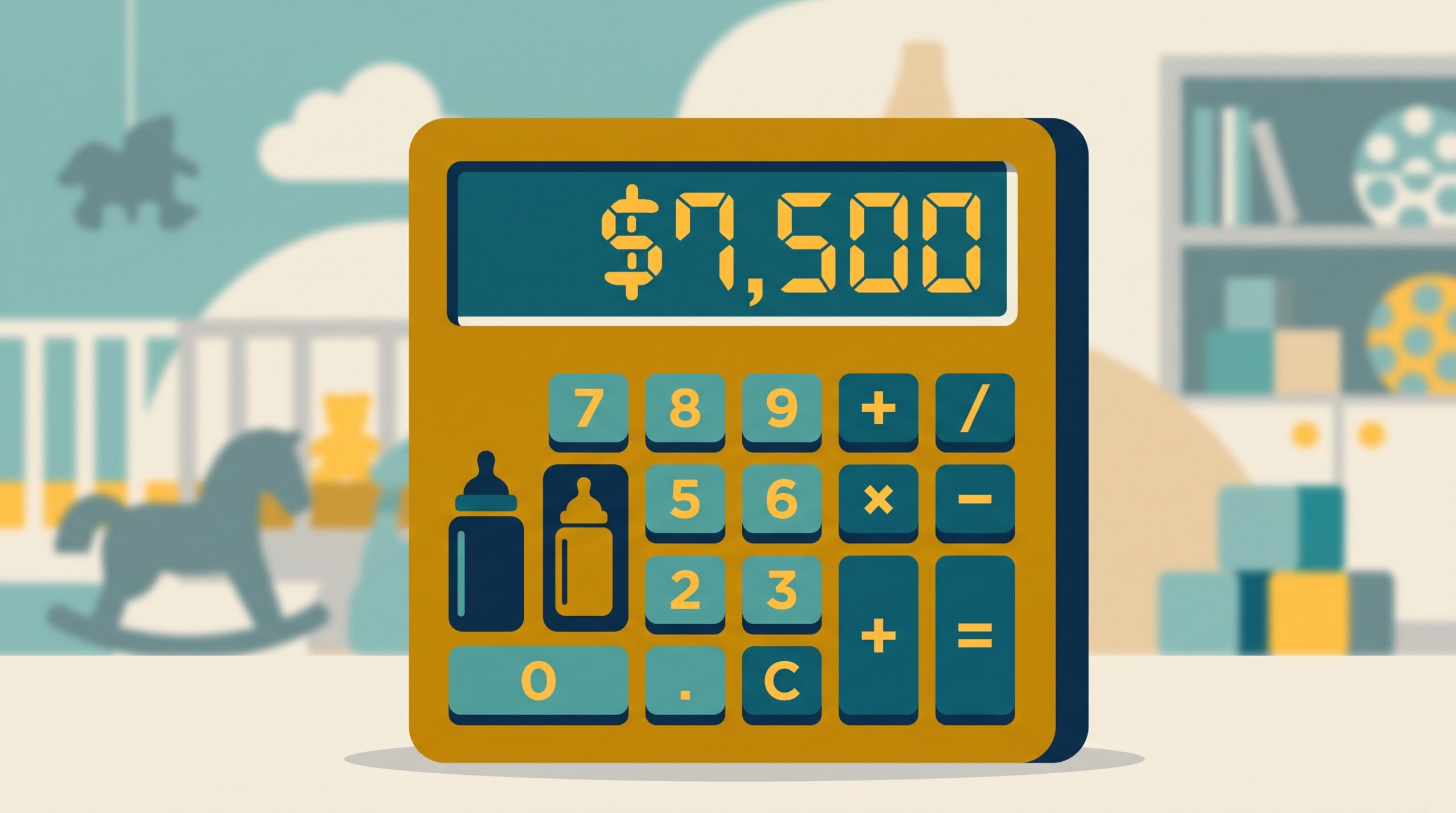
- The federal Dependent Care Flexible Spending Account (FSA) cap is $7,500 per household in 2026 (up from $5,000) under the One Big Beautiful Bill Act, and it does not increase with a second or third baby.
- The Special Supplemental Nutrition Program for Women, Infants, and Children (WIC) enrolls and feeds each infant separately. Twins or triplets count as two or three separate participants, each getting a full, separate monthly food package.
- Household income still has to fall under 185% of the federal poverty line for WIC, but a larger household (one more baby, or two) raises that income ceiling along with it.
- A bigger car and higher delivery or neonatal intensive care unit (NICU) costs are real, multiples-specific expenses, and no federal program is sized to match them directly.
Twins and triplets roughly double or triple the direct costs of a newborn, but two federal programs that matter most don’t scale the same way: the Dependent Care FSA caps out at $7,500 per household no matter how many infants are in care, while WIC treats each baby as a fully separate participant entitled to their own complete food package.
In this article
- What twins actually cost, and what doesn’t double
- The $7,500 cap that stays the same for one baby or three
- Why WIC works differently for multiples
- The real, unmatched costs: the car and the hospital bill
- Frequently asked questions
A second baby in diapers costs roughly the same, per baby, as the first. A second baby in a federal Dependent Care Flexible Spending Account costs nothing extra, because the household cap doesn’t move.
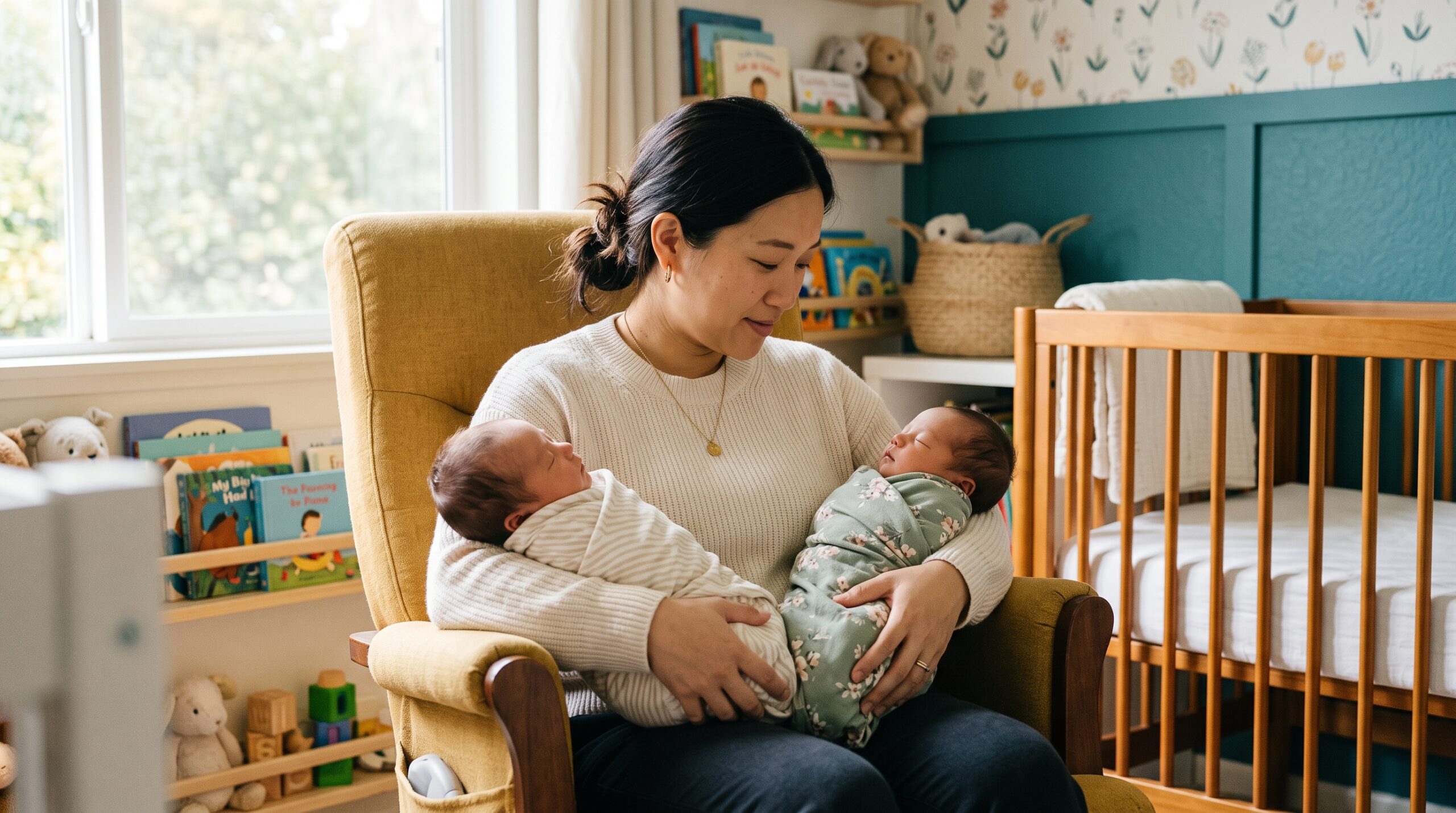
Hana brought twin daughters home from the hospital on the same October afternoon and immediately started pricing two of everything: two car seats, two formula tabs, two spots on the daycare waitlist. The one number she expected to double, her household’s pretax child care savings, stayed fixed at $7,500 for the year.
What twins actually cost, and what doesn’t double
Diapers, formula, clothing, and daycare tuition are variable costs. They scale with headcount, so twins run close to double a single baby’s cost and triplets close to triple it. Federal benefit programs are built differently, and some of them are deliberately structured around the household, not the child count, which is the part most new parents of multiples never hear explained before the bills start arriving.
The $7,500 cap that stays the same for one baby or three
Section 70404 of the One Big Beautiful Bill Act (Public Law 119-21, enacted July 4, 2025) amended Section 129(a)(2)(A) of the Internal Revenue Code, raising the yearly pretax Dependent Care FSA exclusion from $5,000 ($2,500 if married filing separately) to $7,500 ($3,750 if married filing separately), effective for tax years beginning after December 31, 2025. The increase is a flat dollar figure per household. It does not rise to $15,000 for two kids in care or $22,500 for three.
| Children in paid care | 2026 Dependent Care FSA cap (married filing jointly) |
|---|---|
| 1 child | $7,500 |
| 2 children (twins) | $7,500 |
| 3 children (triplets) | $7,500 |
Run the arithmetic against a real daycare bill. If infant care for twins runs $700 a week per baby, a household pays roughly $72,800 a year for both. Only $7,500 of that can move through the pretax account, and the remaining $65,300 is paid with after-tax dollars, the same as if there were only one baby in care.
For a deeper look at how and when to open this account after a birth, see this companion article on the Dependent Care FSA window.
Why WIC works differently for multiples
WIC draws its income test from household size under Section 246.7 of the Code of Federal Regulations (7 CFR 246.7), generally set at 185% of the federal poverty line. A household of 5 in 2026, for example two parents, an older child, and newborn twins, qualifies at up to $71,558 a year (185% of the $38,680 federal poverty line for a household that size). Adding twins doesn’t just add mouths to feed; it raises the household’s own eligibility ceiling at the same time.
Once enrolled, WIC doesn’t halve its benefit to split between babies. Under 7 CFR 246.10, supplemental foods are provided to each participant individually, and each infant is certified and served as their own WIC participant. Twins qualify as two separate participants, each issued a complete monthly food package of formula and infant foods; triplets qualify as three.
The real, unmatched costs: the car and the hospital bill
Some costs genuinely have no federal program sized to match them. Most vehicle back seats have only two full LATCH (Lower Anchors and Tethers for Children) anchor positions; a third child seat typically has to be installed with the vehicle’s own seatbelt instead, which can mean a larger vehicle sooner than planned. Delivery and NICU costs for multiples also tend to run well above a single birth, since multiple pregnancies carry a higher rate of preterm delivery and NICU admission; ask the hospital’s billing office for an itemized estimate by baby, not a single combined figure, since insurance deductibles and out-of-pocket maximums apply per family, not per infant.
Frequently asked questions
Does the Child Tax Credit at least scale per baby, even if the FSA does not?
Yes, that’s the structural difference worth knowing. The Child Tax Credit is calculated per qualifying child, with no cap on how many children a household can claim, unlike the Dependent Care FSA’s flat household ceiling. Confirm your household’s specific credit amount with a tax professional, since income phase-outs still apply.
Can both parents each open a $7,500 Dependent Care FSA through separate employers?
No. The $7,500 cap (or $3,750 if married filing separately) applies to the household as a whole, not per employer or per parent. If both spouses have access to an FSA, their combined elections still cannot exceed the household limit.
Does WIC require separate applications for each twin?
Each infant is certified individually, but most WIC clinics process multiples in a single household visit rather than requiring separate appointments. Bring documentation for both or all three babies, since each one needs their own eligibility determination even when the household income test is shared.
Is there a federal program specifically for the extra cost of a larger vehicle?
No federal program is sized specifically to vehicle costs for multiples. Some state Medicaid and WIC offices can point families toward local nonprofit organizations that lend or provide car seats, which is worth asking about directly, since availability varies widely by state and county.
Do twins or triplets count as one birth or multiple events for unpaid leave under the Family and Medical Leave Act (FMLA)?
The Family and Medical Leave Act treats the birth itself as a single qualifying event regardless of how many babies are born, so a parent of twins or triplets does not receive extra weeks of federal leave for the additional children. State paid-leave programs vary, so check your state’s specific rules separately.




Leave a Reply