

6 min read · Last updated October 12, 2026
- The Katie Beckett option, authorized under the Tax Equity and Fiscal Responsibility Act of 1982 (TEFRA), sets aside parental income and assets entirely. Eligibility runs on the child’s own medical needs, not household earnings.
- A state must find three things true under federal regulation: the child needs hospital, skilled nursing facility (SNF), or intermediate care facility (ICF) level care, home care is appropriate instead, and home care costs no more than institutional care.
- As of 2024, 44 states offer a path to this coverage: 17 through a state plan option, 22 through a waiver, and 5 through both, according to a Council of State Governments research memo.
- A state plan option is a legal entitlement with no enrollment cap. A waiver version can carry a waiting list, so which path your state uses changes how fast your child gets covered.
The Katie Beckett Medicaid option lets a state cover a medically complex child’s care at home without counting the parents’ income or assets, as long as the state finds that home care is appropriate and costs no more than keeping the child in an institution.
In this article
- What the Katie Beckett Medicaid option actually tests
- Why the newborn’s discharge date starts the clock
- State plan vs. waiver, and why the difference matters
- The mistake that costs families this option
- Frequently asked questions
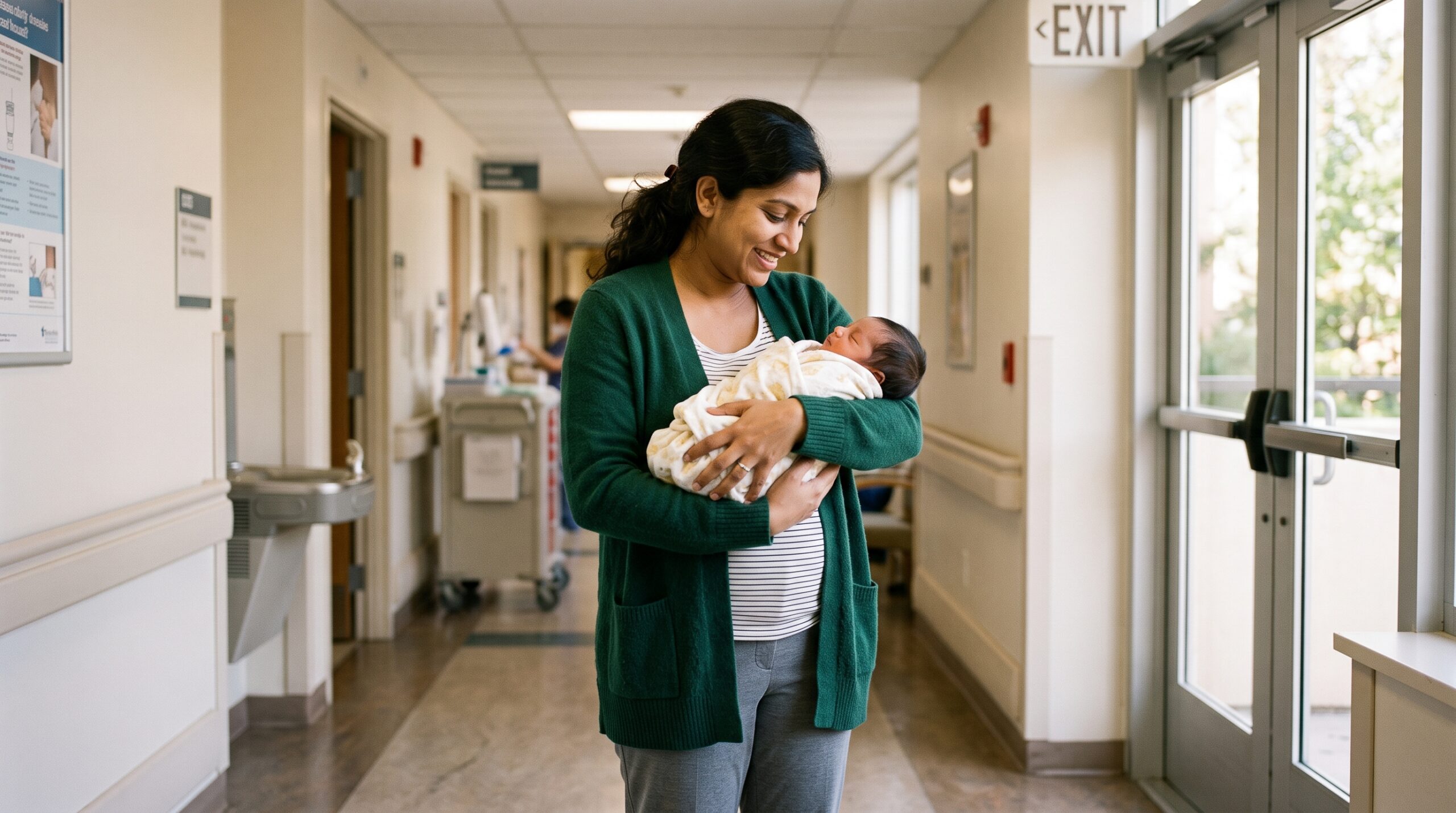
Say a newborn is born with a congenital diaphragmatic hernia, and by the time the neonatal intensive care unit (NICU) team begins discharge planning, the baby needs a feeding tube and overnight oxygen monitoring just to go home at all. For Priya, whose son needed exactly that, the hospital’s discharge planner mentioned a program named after Katie Beckett before the family’s income ever came up, because this particular Medicaid pathway was never built to ask about a parent’s paycheck.
What the Katie Beckett Medicaid option actually tests
Under the Code of Federal Regulations (CFR), specifically 42 CFR 435.225, a state may cover a child 18 or younger who would qualify for Medicaid if institutionalized, and who is receiving at-home care that would otherwise be provided in a hospital, SNF, or ICF. Before a state can say yes, it has to confirm three things:
- The child requires the level of care a hospital, SNF, or ICF provides.
- It is appropriate to deliver that level of care outside an institution.
- The estimated Medicaid cost of care at home is no higher than the estimated cost of the matching institutional care.
That third test is why this option exists at all. Regular Medicaid for a minor child normally counts a parent’s income against the child’s eligibility, a process caseworkers call “deeming.” This option sets deeming aside entirely once a state finds all three conditions met, because the alternative, an institutional stay, would cost the Medicaid program money either way.
Why the newborn’s discharge date starts the clock
The level-of-care determination behind this option usually needs a physician’s certification, and that certification is easiest to get while a child is still admitted and the full medical record is already in front of the care team. Waiting until after discharge to start the paperwork risks a real gap: equipment, visiting-nurse hours, or supplies a family assumed would just be covered can sit unapproved during exactly the week a newborn needs them most.
Priya’s own discharge planner raised the application the same week the hospital set a tentative discharge date, not after. Ask the discharge planner or the hospital’s social worker directly, before a discharge date is set, whether the state’s Katie Beckett or TEFRA option applies and what certification the state needs from the attending physician. A state Medicaid office can also confirm the current application path by phone.
State plan vs. waiver, and why the difference matters
States implement this option two different ways, and the difference changes how fast a family actually gets covered.
| Path | How a child qualifies | What it means for the family |
|---|---|---|
| TEFRA state plan option | Any child who meets the three-part test qualifies | A legal entitlement under the state’s Medicaid plan. No enrollment cap, no waiting list by law. |
| Katie Beckett waiver | A child who meets the three-part test, within a fixed number of program slots | The state sets a maximum number of participants. A waiting list can form once slots fill. |
As of 2024, 44 states reported offering this coverage through one or both paths: 17 through a state plan option, 22 through a waiver, and 5 through both, per the Council of State Governments’ Katie Beckett Medicaid programs research memo, prepared for a Connecticut legislative working group. A state that runs this only as a waiver can have more families waiting than a state that runs it as a state plan option, so ask your caseworker which version your state uses before assuming a slot is automatic.
The mistake that costs families this option
The single biggest reason families never get this coverage is that no one brings it up by name. A pediatrician or hospital discharge planner focused on the medical plan may never mention a specific Medicaid pathway unless asked directly.
If your child has a diagnosis that requires ongoing nursing, equipment, or monitoring at home, ask your hospital’s discharge planner and your state Medicaid office directly whether the state offers a TEFRA state plan option or a Katie Beckett waiver. Don’t wait for someone else to raise it first.
A second mistake is assuming the paperwork ends once the state approves the child. The three-part test is reviewed periodically, not just once at intake, so keep the physician documentation supporting the level-of-care finding current for any renewal.
If your baby is still in the NICU and you haven’t worked through coverage basics yet, the first two weeks after a NICU admission covers the broader insurance and benefits picture this option fits into.
Frequently asked questions
Does our household income disqualify my child from the Katie Beckett option? No. This option sets aside the “deeming” rule that normally counts a parent’s income against a child’s Medicaid eligibility. A state decides eligibility based on the child’s own level-of-care need and whether home care costs no more than institutional care, not on household earnings.
What if my state doesn’t call this program “Katie Beckett”? Many states use a different name for the same federal option, often “TEFRA,” a home-care waiver name, or a state-specific program title. Ask your state Medicaid office whether it offers coverage under 42 CFR 435.225 or an equivalent waiver, since the underlying federal rule is the same regardless of the label.
Can we apply before our baby is discharged from the NICU? Yes, and starting earlier is better. The level-of-care certification this option needs usually comes from the attending physician, which is easiest to obtain while your child is still admitted and the full medical record is in front of the care team.
Does this option cover ongoing in-home nursing, or just equipment? It can cover both, depending on what the state’s level-of-care determination finds necessary. The underlying test is whether the care being delivered at home matches what a hospital, SNF, or ICF would otherwise provide, which can include nursing hours as well as equipment and supplies.
What happens if our family moves to a different state? Coverage does not automatically transfer. The new state has to make its own determination, and not every state offers this option the same way, through a state plan, a waiver, or at all. Contact the new state’s Medicaid office before the move if possible.





Leave a Reply