
6 min read · Last updated August 14, 2026
- The No Surprises Act bans balance billing from out-of-network ER doctors, hospitals, and air ambulances, but it explicitly excludes ground ambulance transport.
- Only 16 states have their own ground ambulance balance-billing law as of a March 2024 federal report; roughly 34 states plus DC have no protection at all.
- Medicare patients are fully protected: mandatory assignment since 2002 means an ambulance supplier can bill only the deductible and 20% coinsurance.
- Washington’s own insurance regulator found ground ambulance balance bills routinely topped $500, even after insurance paid its share.
In this article
- The moment it happened
- The first 24 hours: know what the No Surprises Act actually covers
- Programs and protections that do apply
- The mistake that costs people the most
- A worked example: what the gap looks like in dollars
- At 30, 60, and 90 days
- Frequently asked questions
The moment it happened
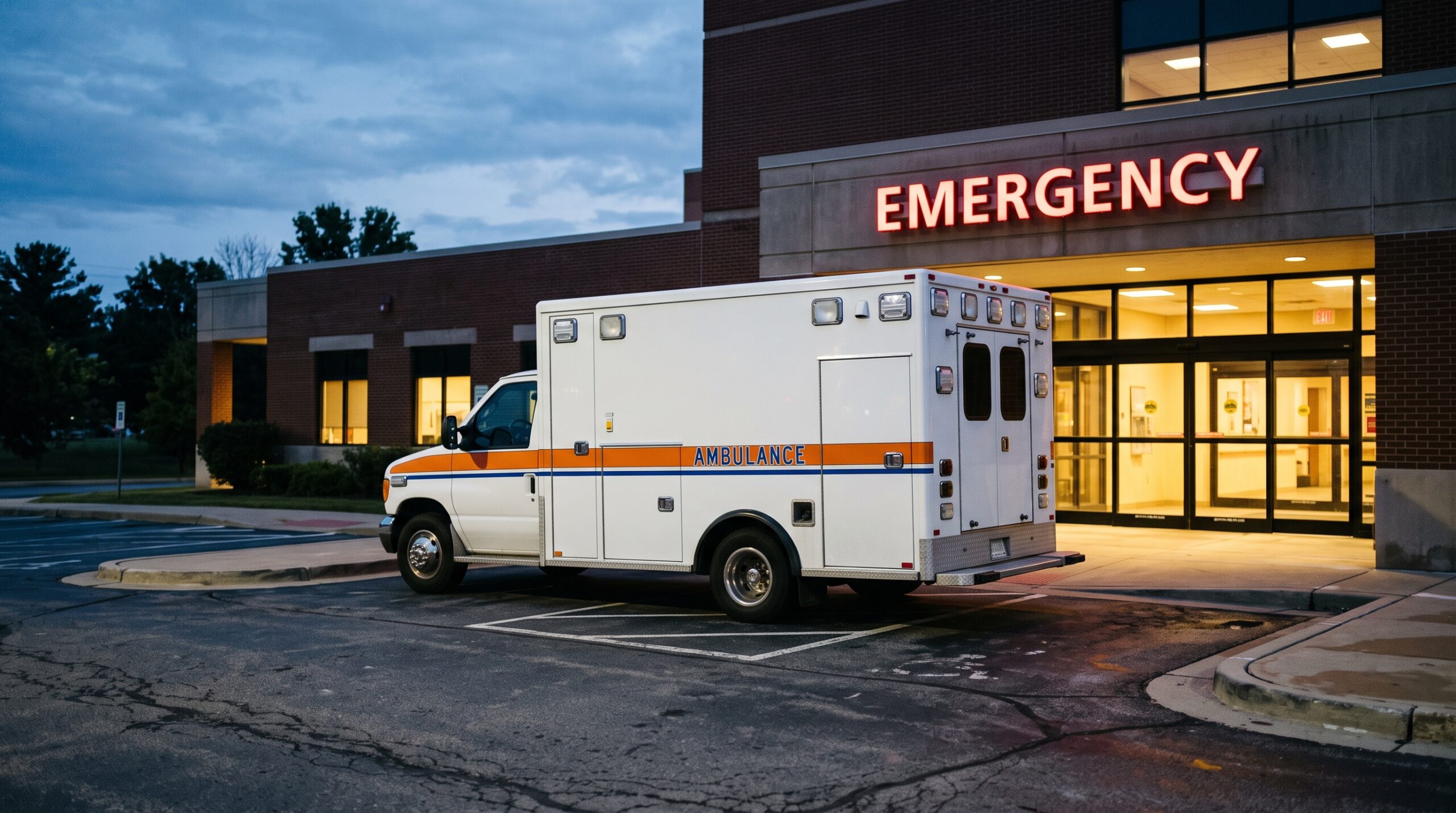
Dana called 911 after chest pain wouldn’t stop, and the ambulance took her to the nearest in-network hospital. The hospital bill and the ER doctor’s bill both came back already adjusted to her in-network rate, exactly as federal law requires. The ambulance bill arrived separately, three weeks later, for $612 her insurer wouldn’t cover.
The first 24 hours: know what the No Surprises Act actually covers
Since January 1, 2022, the federal No Surprises Act has banned balance billing from out-of-network emergency physicians and facilities, and separately from out-of-network air ambulance providers. It says nothing about ground ambulance transport. The Centers for Medicare & Medicaid Services states the gap in plain language in its own consumer guidance: ground ambulance services are not covered under the No Surprises Act. This isn’t a loophole discovered after the fact. Congress built a federal advisory committee into the same law specifically to study why ground transport was left out, and that committee’s own March 2024 report to Congress laid out 30 recommendations for closing the gap, none of which have become law yet.
If the bill you’re disputing is from the hospital or the emergency doctor rather than the ambulance, the first 30 days after an ER bill arrives already follow a more protected path than the ambulance ride does.
Programs and protections that do apply
| Coverage situation | Ground ambulance balance-billing protection |
|---|---|
| Medicare patients | Fully protected. Mandatory assignment since 2002 means the ambulance supplier can bill only the Part B deductible and 20% coinsurance, nothing more. |
| 16 states with their own law (AR, CA, CO, DE, FL, IL, IN, LA, ME, MD, NY, OH, TX, VT, WA, WV) | Protected under state law, though the specific rules and rate-setting method vary by state. |
| The remaining roughly 34 states plus DC | No ground-ambulance-specific balance-billing protection exists. |
The federal No Surprises Help Desk (1-800-985-3059) can route a complaint and point you toward whatever does apply, but it can’t fix a ground ambulance bill directly, since the underlying law simply doesn’t reach it.
The mistake that costs people the most: assuming the No Surprises Act already covered it
Paying an ambulance balance bill right away, assuming it’s already regulated the same way the hospital bill was, is the single costliest assumption in this situation.

Before paying anything, check whether your state is one of the 16 with a ground-ambulance-specific law. If it is, you likely have a real, enforceable dispute right. If it isn’t, your options are narrower, but a written appeal to your insurer and a complaint to your state insurance department are still worth filing. Neither erases the bill automatically, but both are paths the federal law simply doesn’t provide here.
A worked example: what the gap looks like in dollars
Washington’s own insurance regulator studied this directly. For a basic life support emergency ground transport, the average billed charge from a non-participating provider ran $802.92, while the provider’s own claimed cost for the same service was $1,382.25. After insurance paid its allowed portion, the study found patients still faced a balance bill of over $500 in every part of the state it examined, regardless of which ambulance provider responded to the call. That gap between what insurance allows and what the provider bills, not the hospital charge, is where the money actually goes missing. If your insurer denied or shorted the underlying claim entirely, the appeal deadlines that apply to a denied hospital claim are a useful next stop.
At 30, 60, and 90 days
Right away: check whether your state is one of the 16 with a ground ambulance balance-billing law; if it is, cite it explicitly in writing to the ambulance provider and your insurer.
By 30 days: file a formal appeal with your insurer if the ambulance charge wasn’t paid at an in-network-equivalent rate, and keep the original itemized bill.
By 60 to 90 days: if your state has no protection and the appeal fails, file a complaint with your state Department of Insurance or Attorney General’s consumer protection office. For Medicare patients, none of this should be necessary, since balance billing on ambulance transport isn’t legally possible under Medicare’s own rules.
Frequently asked questions
Does the No Surprises Act protect me from a surprise ambulance bill? Only if it’s an air ambulance. The federal law bans balance billing from out-of-network emergency physicians, hospitals, and air ambulance providers, but it explicitly excludes ground ambulance transport. CMS states this directly: ground ambulance services are not covered under the No Surprises Act.
Which states protect me from a ground ambulance balance bill? As of a March 2024 federal report, 16 states have their own ground-ambulance-specific balance-billing laws, including Colorado, Maryland, New York, and Texas. Outside those states, no law specifically stops a ground ambulance provider from billing you the difference.
Does Medicare cover ground ambulance transport without a balance bill? Yes. Since 2002, Medicare’s ambulance fee schedule has required mandatory assignment, meaning the supplier must accept Medicare’s allowed rate as full payment. You owe only your Part B deductible and 20% coinsurance, and balance billing isn’t legally possible.
Is there a federal fix coming for ground ambulance bills? A federal advisory committee created by the No Surprises Act itself recommended capping patient cost-sharing and building new protections in its March 2024 report to Congress. None of those recommendations have become law yet, so the current patchwork of state laws is still what actually applies.
What should I do if I get a ground ambulance balance bill and my state has no law protecting me? File a written appeal with your insurer first, and keep the itemized bill. If the appeal doesn’t resolve it, file a complaint with your state’s Department of Insurance or Attorney General’s consumer protection office. It won’t erase the bill automatically, but it opens a path the federal law doesn’t provide.





Leave a Reply