
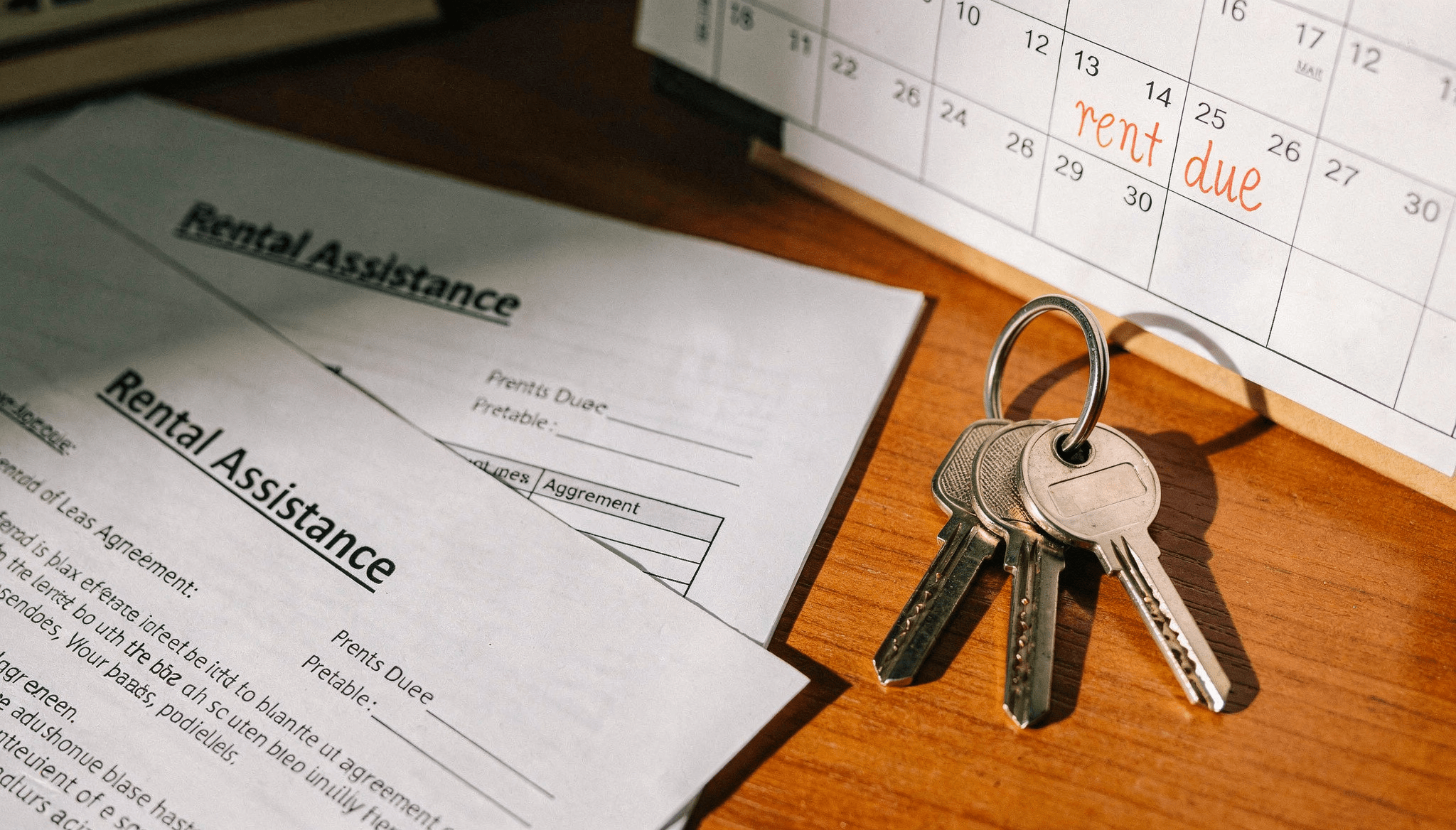
Being behind on rent is a different problem from not being able to afford rent. If you owe three months of back rent, a program that lowers your rent going forward does nothing about the balance already sitting on your ledger. Arrears have their own rules, their own funding sources, and their own clock. This page covers only that: money you already owe, and how people actually clear it.
If your problem is longer term, that your housing itself is unstable and you are facing an eviction filing, a foreclosure, or the loss of a place to live, that is a different sequence. We cover it in the housing instability guide.
The federal rental assistance program most articles still point to has ended
Start here, because most rent-help content on the internet is now out of date. The federal Emergency Rental Assistance program, usually written as ERA, was the pandemic-era fund that paid billions in back rent directly to landlords. It is over.
The U.S. Department of the Treasury states it plainly on its own ERA program page: “The period of performance for ERA2 awards has ended. ERA2 grantees may no longer use ERA2 award funds to assist renters.” The period of performance closed on September 30, 2025. There is no federal ERA3.
This matters more than a technicality. If you call your city asking to “apply for ERA,” the answer will be no, and some people stop there and assume nothing exists. Plenty still exists. It is just funded and named differently now, and it is almost entirely local.
Where past-due rent money actually comes from in 2026
Four channels still pay arrears. They differ in who runs them, what they will cover, and how fast they move. That last column is the one to read first if you already have a court date.
| Source | Who runs it | What it typically covers | How fast |
|---|---|---|---|
| State or city rental assistance | State housing agency or county, funded from state budgets, remaining federal block grants, or local funds | Back rent paid directly to the landlord, sometimes plus late fees | Weeks. Application windows open and close with funding |
| Homelessness prevention (ESG) | Local providers funded through HUD’s Emergency Solutions Grants | Short-term rent arrears specifically to prevent an eviction | Days to weeks, prioritized by how imminent the loss of housing is |
| Community and faith-based funds | Local nonprofits, often reached through 211 | Partial payments, frequently one-time and capped | Fastest of the four, sometimes same week |
| A written agreement with your landlord | Your landlord | No new money, but it converts a lump sum into a schedule | Immediate, and it is the only one you fully control |
The single best starting point is the federal government’s own referral tool. Treasury now directs renters to the Consumer Financial Protection Bureau’s rental assistance finder, which maps your location to whatever local programs are currently operating. Use it before you spend an afternoon searching program names that no longer exist.
The catch-up sequence, in order
Order matters here, because two of these steps take weeks and one of them protects you while the others are pending.
- Get the exact number in writing. Ask your landlord for a written ledger showing base rent owed, late fees, and any other charges, month by month. Assistance programs pay against a documented balance. A number you estimated over the phone will slow the file down.
- Tell your landlord you are applying, in writing. Email is fine. Landlords are far more willing to pause a filing when they know a payment may be coming, because a program that pays them directly is better for them than an eviction that recovers nothing.
- Apply to the local program the same week. Not after the court date. Funding is first come, first served, and windows close without much notice.
- Call 211 in parallel. Do not treat this as a backup. Community funds move faster than government programs and can often cover the gap a program will not.
- Ask for a written payment plan for whatever remains. Assistance rarely covers every dollar. The remainder is what you negotiate.
What a landlord has to accept, and what they do not
This is where expectations most often break, so be clear-eyed about it.
A private landlord generally does not have to accept a payment plan, and in most states does not have to pause an eviction just because an application is pending. Some states and cities have passed rules requiring landlords to accept rental assistance payments or to wait while an application is processed, but these are local, not federal, and they vary widely. Do not assume you have that protection. Ask your local legal aid office whether your state has one.
What a landlord generally cannot do is remove you without going through the court process. Changing the locks, removing your belongings, or shutting off utilities to force you out is illegal in most states regardless of how far behind you are. If that is happening, that is a call to legal aid today, not a rent problem.
One thing worth knowing: many programs pay the landlord directly rather than paying you. Landlords who have been burned before are often more cooperative once they understand that. Say it explicitly when you tell them you are applying.
The mistake that costs people their window
People wait for the eviction notice before asking for help, because until the notice arrives it does not feel like an emergency yet. By then the balance is larger, the landlord has already paid to file, and the fastest programs are the ones with the least money left.
Apply the month you first miss, not the month you get served. Nothing about the application gets easier by waiting, and the amount you are asking for only grows.
Signs a rent-help offer is not real
Arrears attract scams because the people looking are under time pressure. Two rules cover nearly all of it. First, no legitimate rental assistance program charges an application fee. Second, a real program pays the landlord or the utility, not you, and never asks for a gift card, wire transfer, or cryptocurrency. Anyone guaranteeing approval before seeing your ledger is selling something.
Be especially careful with anything still advertising “emergency rental assistance” as an open federal program. As of September 30, 2025, that program is closed, and sites still promoting it by name are either stale or deliberately misleading.
Frequently Asked Questions
Can I still apply for Emergency Rental Assistance?
No. Treasury states that the period of performance for ERA2 awards ended on September 30, 2025, and grantees may no longer use those funds to assist renters. Some states continued their own rental assistance using other money, so check the CFPB rental assistance finder for what is running in your area.
Will a program pay my late fees too?
Sometimes. It depends entirely on the local program’s rules. Ask when you apply, and get the total balance including fees on your landlord’s written ledger so nothing is missed.
Does applying stop an eviction?
Not automatically, and not in most states. A few states and cities require landlords to pause while an application is pending, but that is a local rule. Assume it does not apply to you until legal aid confirms it does.
Do I have to repay rental assistance?
No. Rental assistance is a grant, not a loan. If something described as rent help requires repayment, it is a loan, and you should read the terms before signing. Rent is far from the only place this kind of money shows up either, our breakdown of hidden grant programs you do not have to pay back covers what else is out there.
What if I only owe part of a month?
Apply anyway. Smaller balances are cheaper for a program to clear and are often approved faster, and a partial month left unpaid still accrues fees and still counts toward an eviction filing.





Leave a Reply