
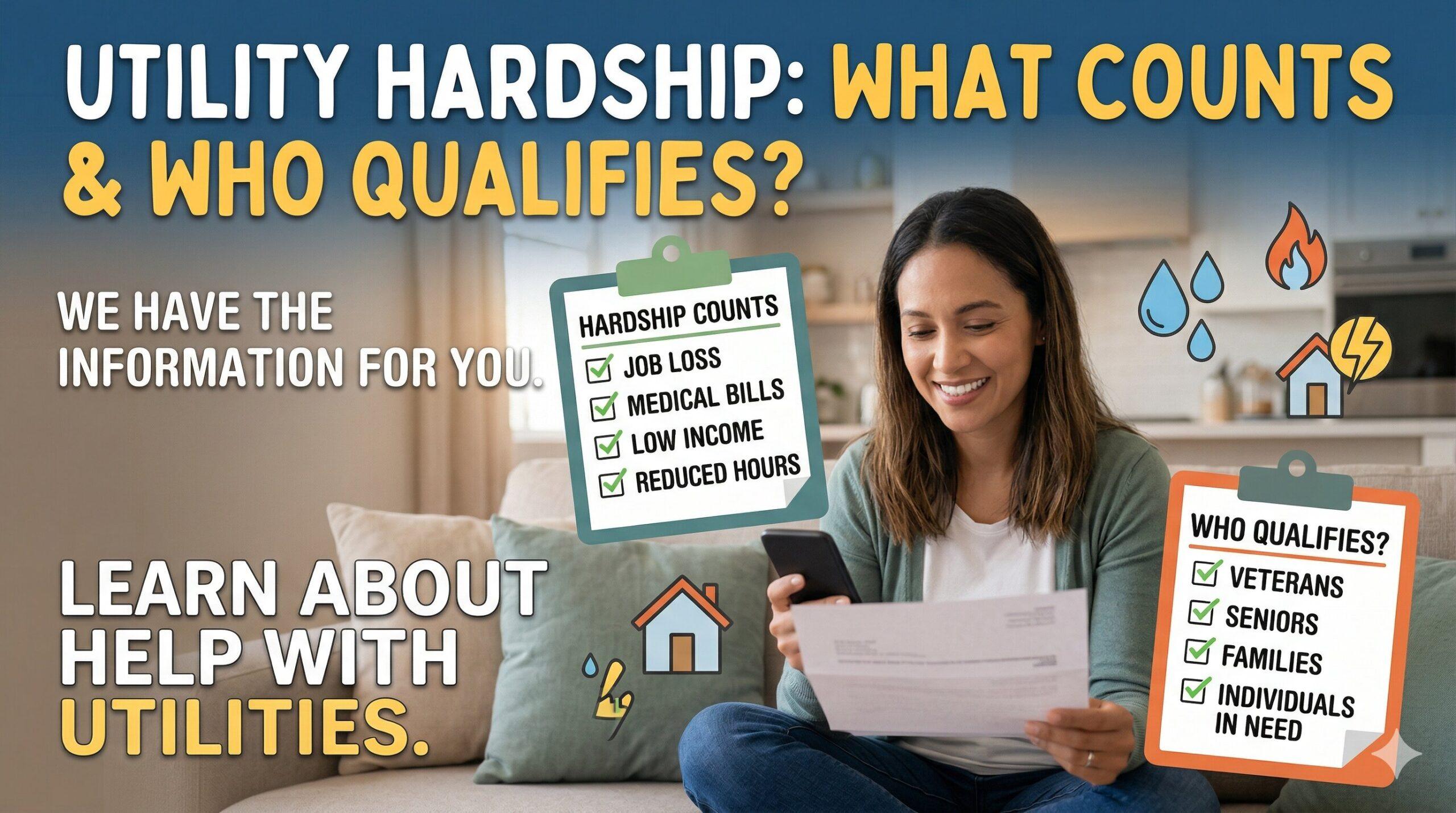
Most people assume utility hardship means you simply forgot to pay your bill. The reality is a lot more layered than that. A utility hardship is a documented financial situation where a household cannot pay for essential services like electricity, gas, water, or heat without sacrificing other basic needs like food, rent, or medication. It is not just about being behind on payments. It is about being in a position where paying the bill creates a deeper financial hole for the whole family. Understanding how programs define this term is the first step toward getting real help, because the definition determines whether you qualify, how quickly your case gets prioritized, and which specific type of assistance your household is eligible to receive.
Who Actually Qualifies for Energy Assistance
Most assistance programs look at your household income relative to the federal poverty level, commonly called the FPL. If your income falls at or below 150 percent of the FPL, you will likely qualify for programs like the Low Income Home Energy Assistance Program, better known as LIHEAP. Some state programs stretch that threshold up to 200 percent of the FPL, especially during winter heating seasons or extreme summer heat events when health risks are highest. The threshold varies by state and changes annually, so checking the current guidelines for your specific location before you assume you do not qualify is always the right first move.
Beyond income, programs also consider household size, whether any member relies on medical equipment that uses electricity, and whether the home has children under six or adults over sixty. These factors push an application higher on the priority list and open access to deeper levels of support. A utility hardship does not have to be permanent to qualify. A temporary hardship caused by a job loss, a medical emergency, a divorce, or even a natural disaster all count. Programs exist specifically for people who were financially stable and then hit an unexpected wall, not just for households in chronic poverty. Working households with regular income can still qualify if their monthly expenses consume most of what they earn.
Understanding your state’s specific rules is also worth the time it takes. States that have adopted higher LIHEAP thresholds tend to cover more working households, and calling your local community action agency costs nothing. The staff there process these applications every day and can tell you within minutes whether your household meets the current criteria. They can also help you identify whether a crisis benefit is appropriate given your timeline, which matters because crisis funds move through a separate and much faster pathway than the standard application process does. If you are close to the income threshold, agency staff can walk you through whether any income exclusions or deductions apply to your household, which sometimes brings a borderline case clearly within qualifying range.
What You Need to Apply
If you received a shut-off notice, lost your job in the last ninety days, or are managing a medical crisis that has reduced household income, you have solid grounds to apply. The key is gathering documentation before you make first contact with the program. Most programs ask for a recent utility bill or account number, proof of income for all adults in the household, a valid photo ID, and proof of your current address. Some programs also require a lease or mortgage statement to verify household composition and confirm the service address.
One area where people frequently get confused is the difference between a utility hardship and a billing dispute. If you believe your bill is inaccurate or inflated due to a metering error, that is a dispute and it goes through a separate process directly with your utility provider. A hardship application is specifically for situations where the bill is accurate but the household genuinely cannot pay it without causing real financial harm to other essential needs. Mixing the two up costs you time and delays assistance. If you are unsure which situation applies, your local community action agency can assess it at no cost and direct you to the right process from the very start.
One final thing worth remembering is that applying for utility assistance does not prevent you from applying again in a future program year. Most programs run on an annual cycle, and households that qualify and receive help can reapply the following year if the financial need continues. Building a relationship with your local community action agency, which handles these applications regularly, can also help you stay informed about program dates and changes in eligibility rules that might affect your household in upcoming cycles.


Leave a Reply